Wednesday, October 6, 2010
Communications Drought
If the 4-12 hour chapa ride that makes my feet swell up like watermelons cause a girl can't move and my backside feel like I was just attacked multiple times by mom's wooden spoon isn't enough to make me feel isolated here in Angoche because I never want to leave because riding out is so awful, the internet droughts and technological issues drive me more nuts! Our internet here in Angoche stopped working at the end of August. Then my computer crashed. Fortunately, I had everything backed up on my external hard drive. A guy in Angoche was able to fix my computer miraculously, but it no longer had any of my files. Last week, I discovered that my external still has a virus and won't let me open any of my backed up files. Yesterday the internet came back. But I can't send anything important. Oh the joys. Mozambique and technology mix like oil and water. But you 2 or 3 remaining faithful readers, get ready!!! As soon as I find that one Angochean guy who has recently gone MIA and turned off his cell phone who might be able to take the virus off my external hard drive, I will unleash a torrent of blog posts like you've never seen before! Thanks for not giving up on me.

Sunday, August 22, 2010
Viva Ciencias!
So just to update you all on Science Fair news...I returned a few hours ago from a rather interesting journey to the regional capital with our three winning students from the local fair and one of my colleagues who helped me with planning and implementing Angoche's fair. Thirty-three students presented their projects at the regional fair, representing 11 different schools in Northern Mozambique. 
 Competition was tough, but Angoche brought its game face. I'm happy to annouce that Iahaia, who placed 3rd in Angoche's fair, took 4th place this weekend with his height estimation equation! His interesting project and excellently delivered presentation charmed the judges. I was so excited to see him place in the top 5.
  Of all my students who participated, Iahaia comes from the least privilaged family. When I went to visit his family to ask permission to take him to the fair, I met everyone in his family and at the end of our conversation, I was given a small mountain of peanuts as a gift. They were pretty enthusiastic about sending their son/brother to this competition so I'm quite certain there was a lot of celebrating going on in his house when he returned with 4th place and a bunch of fancy school supplies and other prizes.
And here's Angoche with the new American Ambassador here in Mozambique, Leslie V. Rowe. Her presence was exciting addition this year and hopefully reinforced the importance of continued development of projects like this one. Plus, she's an interesting lady and seemed genuinely interested in Peace Corps Volunteers and our projects.

And here's Angoche again, with one of the Mozambican big-wigs in education. I tried to make them all smile, but didn't have much luck.

Viva Ciencias! Vivaaaaaaaaaaaaaaaa!
Competition was tough, but Angoche brought its game face. I'm happy to annouce that Iahaia, who placed 3rd in Angoche's fair, took 4th place this weekend with his height estimation equation! His interesting project and excellently delivered presentation charmed the judges. I was so excited to see him place in the top 5. Of all my students who participated, Iahaia comes from the least privilaged family. When I went to visit his family to ask permission to take him to the fair, I met everyone in his family and at the end of our conversation, I was given a small mountain of peanuts as a gift. They were pretty enthusiastic about sending their son/brother to this competition so I'm quite certain there was a lot of celebrating going on in his house when he returned with 4th place and a bunch of fancy school supplies and other prizes.And here's Angoche with the new American Ambassador here in Mozambique, Leslie V. Rowe. Her presence was exciting addition this year and hopefully reinforced the importance of continued development of projects like this one. Plus, she's an interesting lady and seemed genuinely interested in Peace Corps Volunteers and our projects.
And here's Angoche again, with one of the Mozambican big-wigs in education. I tried to make them all smile, but didn't have much luck.
Viva Ciencias! Vivaaaaaaaaaaaaaaaa!
Thursday, August 19, 2010
c a p u l a n a
A capulana is a strip of material most often tied around the waist or worn as a scarf.
 Photo by Ausi Petrelius
To fully express with authority the wonders of the capulana, I would like to borrow some words from the heart of a Mozambican writer, Paulina Chiziane, who recently featured an article about capulanas in the nation's most prestegious magazine. Of the capulana, she writes:
"It accompanies all the stages of our life. With it, we recieve the new-born infant; with it, we make attire for all ages; it is shroud, sheet, headscarf, and blanket. With it, we tie the baby to our back, or make a bundle of vegetables, or tie up a bunch of firewood. It's the practical funcion which gives this strip of cloth is very peculiar character. The capulana is the symbol of Mozambican women, of African women. A real Mozambican woman must have a capulana. Two capulanas. A thousand capulanas or more--the number doesn't matter. One capulana is never the same as another. There can never be too many."
I couldn't agree more, Paulina! There can never be too many! We've certainly tried our best to obey this Mozambican cultural norm. Our enthusiasm for capulanas is widespread. One day I was walking down the street and some young woman I don't even know ran up to me and burst out "Teacher! the new women's day capulanas are being sold down the street!" How did she know that I would be interested? That's easy. Everyone knows the Americanas love capulanas and they love that we love them.
Although we usually aren't seen using capulanas to carry bundles of firewood on our head (we don't have the skills for that) or strap a baby to our backs (we don't have the babies for that), we do find them incredibly useful. They make great blankets, towels, curtains, cushions on long chapa rides, embelishments, and of course, clothing. When we're talking clothing, however, I must admit, that I've never gotten too into the traditional way to wear the capulana-wrapped around the waist like these ladies.
 Photo by Ausi Petrelius
Life in the Peace Corps gets difficult and sometimes boring. Some volunteers relieve stress by traveling, some journaling, some exercising, and many by drinking the national brew, 2M. But others, like ourselves, occupy some of our time developing fabulous capulana fashion creations.
STEP 1--> Buy a capulana.

Capulanas are typically 1.5m in length and come in pairs. They cost about 150-300 mzm or $4-8 depending on the quality, novelty, printing process, and origins. We walk to the market to buy them. I usually look for the softest and most colorful. They can have extremely modest to ridiculously flamboant prints. They often feature famous people's faces like presidents, the iconic Mozambican heroine Josina Machel, the pope, and even Obama has a capulana dedicated to him in Malawi. They also frequently feature completely random prints like computers, hands, cards, matches, turkeys, tree-stumps, or casserol--anything goes. So anyways, we bargain with our favorite dealers, then add them to our collection.
STEP 2--> Design the clothes.
 With the purchase of a new capulana comes inspiration. We draw designs of clothing on note cards, rip pages out of magazines, or take pictures of people on the street.
STEP 3--> Go to the tailor.
 This is always the hardest part. We have roughly 6 tailors that we frequent with our capulana needs. Each of them has his forte and quirks. It took them a while to get used to our American tastes--like not wanting to make every dress a little baggier in front to allow for frequent pregnancy--but they're more accostomed to us now. We carefully explain the drawing, get measured, and turn in the capulana.
 STEP 4 --> Pick up new capulana gear.
Finally, after anywhere from a day to 3 months depending on how Mozambican the tailor chooses to be about time-frames, we pick up the clothes. Usually adjustments need to be made, and sometimes the piece is just a big flop. But when it's not...
STEP 5--> Work it!


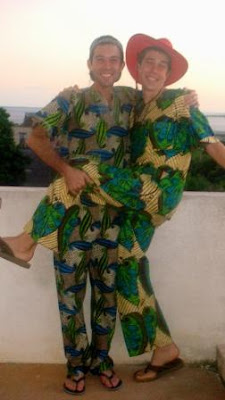


Photo by Ausi PetreliusTo fully express with authority the wonders of the capulana, I would like to borrow some words from the heart of a Mozambican writer, Paulina Chiziane, who recently featured an article about capulanas in the nation's most prestegious magazine. Of the capulana, she writes:
"It accompanies all the stages of our life. With it, we recieve the new-born infant; with it, we make attire for all ages; it is shroud, sheet, headscarf, and blanket. With it, we tie the baby to our back, or make a bundle of vegetables, or tie up a bunch of firewood. It's the practical funcion which gives this strip of cloth is very peculiar character. The capulana is the symbol of Mozambican women, of African women. A real Mozambican woman must have a capulana. Two capulanas. A thousand capulanas or more--the number doesn't matter. One capulana is never the same as another. There can never be too many."
I couldn't agree more, Paulina! There can never be too many! We've certainly tried our best to obey this Mozambican cultural norm. Our enthusiasm for capulanas is widespread. One day I was walking down the street and some young woman I don't even know ran up to me and burst out "Teacher! the new women's day capulanas are being sold down the street!" How did she know that I would be interested? That's easy. Everyone knows the Americanas love capulanas and they love that we love them.
Although we usually aren't seen using capulanas to carry bundles of firewood on our head (we don't have the skills for that) or strap a baby to our backs (we don't have the babies for that), we do find them incredibly useful. They make great blankets, towels, curtains, cushions on long chapa rides, embelishments, and of course, clothing. When we're talking clothing, however, I must admit, that I've never gotten too into the traditional way to wear the capulana-wrapped around the waist like these ladies.
Mine ends up coming un-done and/or I feel incredibly restricted. A girl can't take Americana-sized strides when wearing a capulana like that! (Maybe that's why everyone here walks at just slower than a snail's pace) So we turn our capulanas into capulana clothes, which is also a loved tradition, especially typical of Northern Mozambique.
Life in the Peace Corps gets difficult and sometimes boring. Some volunteers relieve stress by traveling, some journaling, some exercising, and many by drinking the national brew, 2M. But others, like ourselves, occupy some of our time developing fabulous capulana fashion creations.
STEP 1--> Buy a capulana.
Capulanas are typically 1.5m in length and come in pairs. They cost about 150-300 mzm or $4-8 depending on the quality, novelty, printing process, and origins. We walk to the market to buy them. I usually look for the softest and most colorful. They can have extremely modest to ridiculously flamboant prints. They often feature famous people's faces like presidents, the iconic Mozambican heroine Josina Machel, the pope, and even Obama has a capulana dedicated to him in Malawi. They also frequently feature completely random prints like computers, hands, cards, matches, turkeys, tree-stumps, or casserol--anything goes. So anyways, we bargain with our favorite dealers, then add them to our collection.
STEP 2--> Design the clothes.
 With the purchase of a new capulana comes inspiration. We draw designs of clothing on note cards, rip pages out of magazines, or take pictures of people on the street.
STEP 3--> Go to the tailor.
 This is always the hardest part. We have roughly 6 tailors that we frequent with our capulana needs. Each of them has his forte and quirks. It took them a while to get used to our American tastes--like not wanting to make every dress a little baggier in front to allow for frequent pregnancy--but they're more accostomed to us now. We carefully explain the drawing, get measured, and turn in the capulana.STEP 4 --> Pick up new capulana gear.
Finally, after anywhere from a day to 3 months depending on how Mozambican the tailor chooses to be about time-frames, we pick up the clothes. Usually adjustments need to be made, and sometimes the piece is just a big flop. But when it's not...
STEP 5--> Work it!


Tuesday, August 17, 2010
English
Sometimes--trust me, not too often--I wish I was an English teacher here so I could recieve more great txts like the following:
Hello my dear, how are you? I'm not well, i have stomach-ache.your student Pineapple
Hello my dear, how are you? I'm not well, i have stomach-ache.your student Pineapple
Saturday, August 14, 2010
Cow Hearts and (Weird) Fresh Starts
I can't believe we've already begun the 3rd trimester in this school year! I'm almost through my second full year of teaching. Weird. So since I'm an expert--not!--I thought I'd bore you all with some teaching philosophy stuff and a weird story. One thing I've learned so far is that a majority of classroom problems I encounter are my fault or partly my fault as a teacher. I never thought I would think that in a place like this where much of the blame for classroom problems can easily be placed on situational or environmental issues--like ridiculously large class sizes of 120 8th graders, lack of doors and complete walls, and little to no administrative support--but when I reflect on the past 5 trimesters here, I come to the conclusion that a really well-prepared and delivered lesson trumps all those other issues...usually. (There are those times when I think Mozambican classrooms would get the best of the greatest teacher in the world). So toward the end of the second trimester after a frustrating 2 weeks of battling for the lil monsters' attention, I sat down and tried to figure out what I was doing wrong. If I was an 8th grader squished into that classroom and some weirdo foreigner lady delivered me that lesson, I concluded, I wouldn't pay attention either. Back to the drawing board.
Since we were working on the circulatory system, I thought I would try to bring in something to grab their attention. So I went to our market one day after a cow was slaughtered and bought some cow guts. I got lucky. The heart with portions of all the major vessels was still in-tact and no one had taken it yet. I took it home, dissected it, and identified the structures I'd been explaining in class. Show and tell went quite well. Although, I don't think anyone has ever done anything like that before. They started giggling and exchaged the all too familiar glances that they exchange whenever no one knows--since they're only 8th graders and I'm a foreigner and sometimes the only teacher at the cashew factory--if I'm doing something wrong, taboo, or just weird. They got pretty into it though.
They're not a bit squeamish like American students are when it comes to guts and blood. In fact, I had to ask them to stop grabbing and poking the heart with their bare hands...cause after a whole day in the hot sun being squished and poked at (and with no bathrooms or running water for miles), I had no idea what lil extra microscopic prizes were growing on my cow heart. And to confirm what I feared, they all wanted the heart. Sick. I knew that they would cook it up and eat it if they took it home and I didn't want to be responsible for a salmonella death, so I told them no one could have the heart. They asked me if I was going to eat it. I said no and tried to teach them about bacteria, but that just sounds dumb and finicky to a kid who has always seen meat purchased after sitting in the market exposed to flies, poked over by anyone and everyone, and handed to the buyer in no packaging whatsoever. My plan was to take the heart home and throw it away, but people always go through our trash. Darn. So I told them that I was going to swim out to one of the islands and feed it to the sharks. Good one, Professora. They told me Allah would be mad at me for that sin. Got me there. After class, they all started following me home. Creepy. So I started running and someone driving by saw the American teacher with cow guts running from a pack of students and gave me a ride. Whew. So anyway, after their initial anger about me burying the heart in a top-secret location wore off, we've been doing a lot better in class. Yay cow hearts. Yay fresh starts.
Since we were working on the circulatory system, I thought I would try to bring in something to grab their attention. So I went to our market one day after a cow was slaughtered and bought some cow guts. I got lucky. The heart with portions of all the major vessels was still in-tact and no one had taken it yet. I took it home, dissected it, and identified the structures I'd been explaining in class. Show and tell went quite well. Although, I don't think anyone has ever done anything like that before. They started giggling and exchaged the all too familiar glances that they exchange whenever no one knows--since they're only 8th graders and I'm a foreigner and sometimes the only teacher at the cashew factory--if I'm doing something wrong, taboo, or just weird. They got pretty into it though.
They're not a bit squeamish like American students are when it comes to guts and blood. In fact, I had to ask them to stop grabbing and poking the heart with their bare hands...cause after a whole day in the hot sun being squished and poked at (and with no bathrooms or running water for miles), I had no idea what lil extra microscopic prizes were growing on my cow heart. And to confirm what I feared, they all wanted the heart. Sick. I knew that they would cook it up and eat it if they took it home and I didn't want to be responsible for a salmonella death, so I told them no one could have the heart. They asked me if I was going to eat it. I said no and tried to teach them about bacteria, but that just sounds dumb and finicky to a kid who has always seen meat purchased after sitting in the market exposed to flies, poked over by anyone and everyone, and handed to the buyer in no packaging whatsoever. My plan was to take the heart home and throw it away, but people always go through our trash. Darn. So I told them that I was going to swim out to one of the islands and feed it to the sharks. Good one, Professora. They told me Allah would be mad at me for that sin. Got me there. After class, they all started following me home. Creepy. So I started running and someone driving by saw the American teacher with cow guts running from a pack of students and gave me a ride. Whew. So anyway, after their initial anger about me burying the heart in a top-secret location wore off, we've been doing a lot better in class. Yay cow hearts. Yay fresh starts.
Saturday, July 31, 2010
a p a s
What do my toilet and arteries have in common? They both risk clogging because of a little thing called apa. ba-boom-ching! There is much to be explored in the world of Angochean cuisine which boasts a fine array of fresh delicious seafood; yummy healthy traditional dishes made with coconut milk, casava leaves, and peanuts; spicy Indian curries over rice; wonderful tropical fruit; and more...
...and then there's street food. Street food is down right bad for your constitution and--lets face it--doesn't even taste very good; but everyone has their street food vice anyway (if they're honest). Amongst all street food varieties, apa is king, and quite possibly the only food in Angoche that can truly be considered fast food.
So what exactly is an apa?
1 folded up tortilla ish thing + 1 greasy fried egg + ketchup + unrefrigerated mayo = apa

Why does a smart person eat this?
In America, you lucky ducks eat a lot of Taco Bell after a night of drinking, or you say "let's just order pizza" when lacking culinary creativity, or you carry out Chinese when you don't have the energy to fire up the kitchen at home, or when electricity in the city disappears...nevermind, that doesn't happen there. Here, in situations such as these we turn to the apa. The apa stand is actually located conveniently (or inconveniently when it comes to my health) near our apartment. When I first arrived and was introduced to the apa, I was horrified that people eat it. Now, I confess I don't just eat them out of a survival instinct, I like them. Maybe they make you dummer. I'm sure they at least take years off one's life, which is actually ok for me. I took a life expectancy test in Developmental Psyc my last year of college and was horrified to find out that I'm supposed to live to be 102. I'm happy to say that I've reduced that to at least 98. Jesus here I come! Thanks apas.

Apa fun facts:
1. Each apa costs 13 mets or roughly $0.40
2. Each apa comes in a tiny plastic sack (so much for the environment!)
3. This student, Mecussete, is the best at getting the egg/tortilla/sauces proportions correct
 4. 2 is the magic number for anyone who goes for a complete meal (average female PCV serving size...guys usually down more...maybe that dumb factor?)
5. The record number of apas eaten in one setting is 10. Gross. (We got bored and had another eating contest) Congrats Andrew, honorable mention: Margaret with 9
 6. The apa stand has a complete menu, but they only serve apas, sweet bread, and a weird drink called maheio (sp?)
This post is lovingly dedicated to Mana Alexi, who has eaten more apas with me than anyone on earth. Does Chicago have Moz town?
...and then there's street food. Street food is down right bad for your constitution and--lets face it--doesn't even taste very good; but everyone has their street food vice anyway (if they're honest). Amongst all street food varieties, apa is king, and quite possibly the only food in Angoche that can truly be considered fast food.
So what exactly is an apa?
1 folded up tortilla ish thing + 1 greasy fried egg + ketchup + unrefrigerated mayo = apa
Why does a smart person eat this?
In America, you lucky ducks eat a lot of Taco Bell after a night of drinking, or you say "let's just order pizza" when lacking culinary creativity, or you carry out Chinese when you don't have the energy to fire up the kitchen at home, or when electricity in the city disappears...nevermind, that doesn't happen there. Here, in situations such as these we turn to the apa. The apa stand is actually located conveniently (or inconveniently when it comes to my health) near our apartment. When I first arrived and was introduced to the apa, I was horrified that people eat it. Now, I confess I don't just eat them out of a survival instinct, I like them. Maybe they make you dummer. I'm sure they at least take years off one's life, which is actually ok for me. I took a life expectancy test in Developmental Psyc my last year of college and was horrified to find out that I'm supposed to live to be 102. I'm happy to say that I've reduced that to at least 98. Jesus here I come! Thanks apas.
Apa fun facts:
1. Each apa costs 13 mets or roughly $0.40
2. Each apa comes in a tiny plastic sack (so much for the environment!)
3. This student, Mecussete, is the best at getting the egg/tortilla/sauces proportions correct
 4. 2 is the magic number for anyone who goes for a complete meal (average female PCV serving size...guys usually down more...maybe that dumb factor?)
5. The record number of apas eaten in one setting is 10. Gross. (We got bored and had another eating contest) Congrats Andrew, honorable mention: Margaret with 9
 6. The apa stand has a complete menu, but they only serve apas, sweet bread, and a weird drink called maheio (sp?)
7. It is nearly unpredictable when the apa stand will be open.
 8. To make a date out of an apa-run, you can sit down in apa alley, a nice shady nook right off to the side of the apa stand. Seats 4 on the bench.

 8. To make a date out of an apa-run, you can sit down in apa alley, a nice shady nook right off to the side of the apa stand. Seats 4 on the bench.
This post is lovingly dedicated to Mana Alexi, who has eaten more apas with me than anyone on earth. Does Chicago have Moz town?
Thursday, July 15, 2010
Science Fair 2010
Just last Saturday Angoche enjoyed her second annual science fair. I've been meeting with 17 science fair students for two months now learning the scientific method and organizing projects. Step aside silly American projects like vinegar and baking soda volcanos and weird planet orbit models! Angoche is going to show how to do a science fair Moz-style! Setting up our new facility this year, I was nervous that our turn out would be weak like it was last year.

But then after the weirdly formal opening speeches by our school director and myself, traffic started flowing.

What else do Angocheans have to do on a Saturday morning? I think we were the most exciting thing going on. Just look at that crowd!

After the grand opening, our judges started circulating. We had Teacher Alexi, Professor Mucaibo (my go-to science colleague at the school), and Cremildo, a biologist from Primeiras e Segundas the WWF/CARE project in Angoche. What a juri forte! The students were judged based on their grasp and application of the scientific method, content of their project, application of their project to both scientific concepts and every-day life, and oral/written defense.
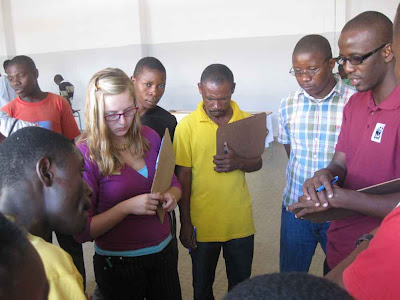 Who takes the cake??? Would it be Luis with his yogert production project? Yussufo with his sugar extraction demonstration? Felismina with her charcoal substitution? Muchangame with his home-made papaya leaf/soap pesticide? Belito, my lil bootlegger with his production of wine from banana leaves? Faruk with his coconut oil extraction process? Separation of a mixture with Carlos? Homemade cast-plaster making with Fina? Or one of the suprise projects presented instead of the projects submittend and explained ahead of time to Professora Xirene (me)??? Stay tuned!!!
Let the explanations and demonstrations begin!
Bottoms up! This kid really trusts Luis and took a big swig of his yogert.
 Carlos, our winner from last year, expertly explains his separation process.
 I think some of the members of the juri will probably want some of your wine, Belito, after this is all over.

 We also invited the Associacao de Solidariedade e Aconselhamento em Saude (what a mouthful!), a health organization in Angoche that works primarily in HIV/AIDS counseling and support. Margarida, my lovely site-mate is partnered with this organization and brought some of her most entertaining colleagues to talk to everyone about HIV prevention!
 They brought along Joao and Maria, 2 dolls that are anatomically...er...um...accurate and obvious. Many health workers are finding that people will ask more specific questions about HIV, relationships, sex, etc if they can talk about the doll. "If Maria does ______, is she at risk?"
But then after the weirdly formal opening speeches by our school director and myself, traffic started flowing.
What else do Angocheans have to do on a Saturday morning? I think we were the most exciting thing going on. Just look at that crowd!
After the grand opening, our judges started circulating. We had Teacher Alexi, Professor Mucaibo (my go-to science colleague at the school), and Cremildo, a biologist from Primeiras e Segundas the WWF/CARE project in Angoche. What a juri forte! The students were judged based on their grasp and application of the scientific method, content of their project, application of their project to both scientific concepts and every-day life, and oral/written defense.
 Who takes the cake??? Would it be Luis with his yogert production project? Yussufo with his sugar extraction demonstration? Felismina with her charcoal substitution? Muchangame with his home-made papaya leaf/soap pesticide? Belito, my lil bootlegger with his production of wine from banana leaves? Faruk with his coconut oil extraction process? Separation of a mixture with Carlos? Homemade cast-plaster making with Fina? Or one of the suprise projects presented instead of the projects submittend and explained ahead of time to Professora Xirene (me)??? Stay tuned!!!
Let the explanations and demonstrations begin!
Bottoms up! This kid really trusts Luis and took a big swig of his yogert.
Iahaia carefully calculates heights of different objects using a mirror and mathematical equation.
Carlos, our winner from last year, expertly explains his separation process.I think some of the members of the juri will probably want some of your wine, Belito, after this is all over.And how could I forget to mention our special guests from the community??? We invited Primeiras and Segundas to set up a display about conservation of natural resources in the area. A number of their technitions showed up with mangrove trees and photos to explain their projects to the community.
 We also invited the Associacao de Solidariedade e Aconselhamento em Saude (what a mouthful!), a health organization in Angoche that works primarily in HIV/AIDS counseling and support. Margarida, my lovely site-mate is partnered with this organization and brought some of her most entertaining colleagues to talk to everyone about HIV prevention!They brought along Joao and Maria, 2 dolls that are anatomically...er...um...accurate and obvious. Many health workers are finding that people will ask more specific questions about HIV, relationships, sex, etc if they can talk about the doll. "If Maria does ______, is she at risk?"
Andre, me, Bento. Bento helped me a ton with science fair preparations. Thanks bud.
 More colleagues dripping with enthusiasm for science.
 Everyone anxiously awaiting the judges decision. It has been a long morning.
 Who will it be???
More colleagues dripping with enthusiasm for science.Everyone anxiously awaiting the judges decision. It has been a long morning.Who will it be???Drum roll please....
In 3rd place we have Iahaia with his height calculating math equation utilizing just a mirror and pencil!
 Takin 2nd and representin all the ladies out there we have Felismina with her charcoal substitution project!

Takin 2nd and representin all the ladies out there we have Felismina with her charcoal substitution project!And Muchangame takes 1st place with his beautifully organized project testing the effectiveness of his home-made pesticide concoction of papaya leaves and soap!
 Congrats everyone on their hard work! Until next year, science nerds!

 Congrats everyone on their hard work! Until next year, science nerds!
Subscribe to:
Posts (Atom)